Banquets and Gatherings
Running a Charity Fundraiser
Organise a benefit dinner or a night at the races with a clear ticket price, a short programme, raffles done properly and a room that pays for itself.
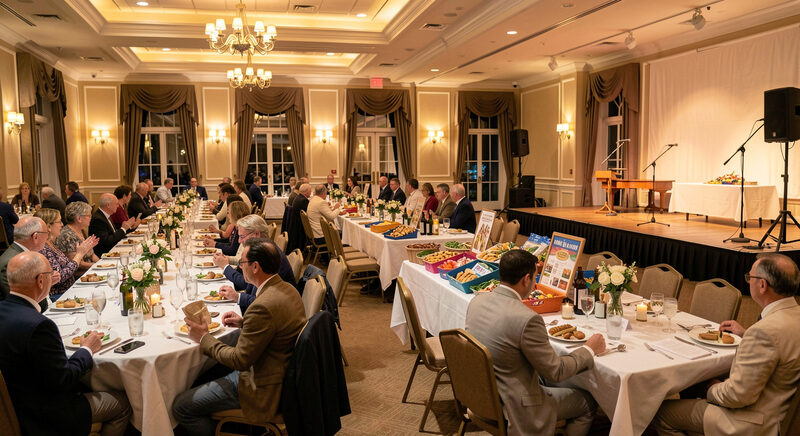
A charity dinner is a party with a job to do. The room has to be pleasant enough that people come, and the evening has to raise more than it costs. Between those two facts sits a small set of decisions: the ticket price, the meal, the bar, the programme and the raffle. Get them right and the night pays for itself with something left over for the cause.
This guide is for the parish, the club or the committee running a benefit dinner, a themed evening or a night at the races, and it treats the event as a small business for one night.
Decide the target before the room
Start with the amount the organisation hopes to raise, then work backwards. If the goal is five thousand dollars, and the room, the meal and the bar cost a certain amount, the ticket sales and the raffle have to cover both the costs and the goal. That arithmetic decides the ticket price and the number of guests the event needs. A fundraiser that sells tickets before the costs are known is a fundraiser that can lose money while looking successful.
Write the budget as a single sheet: costs on one side, income on the other. The venue side of the costs is the same arithmetic as any event, covered in what a banquet hall costs.
Pricing the ticket
A ticket price has to feel worth the evening and still leave a margin. Look at what similar events in the area charge, then set the price so that the meal and the room are covered and a little is left for the cause. It often helps to offer two tiers: a standard ticket and a patron ticket that includes a larger donation, so supporters who can give more have a way to do so. Advance tickets and door tickets can be priced differently to encourage planning.
Keep the price simple and round. A complicated pricing table discourages the very people who want to help.
The meal and the bar
A benefit dinner usually serves a buffet, because it is cheaper per guest and easier to run for a large, mixed crowd. A simple, generous menu with a hot main, a salad and a dessert keeps costs down and guests happy. A cash bar is common at fundraisers, since it lets guests pay for their own drinks and spares the organisers the cost of an open bar. A limited bar of beer and wine is a middle path.
Whatever the choice, confirm who serves the alcohol and who holds the licence, because the rules apply to a fundraiser exactly as they do to a wedding. They are set out in bar service and Ohio liquor rules, and the buffet mechanics are in buffet or plated dinner.
The programme, kept short
A fundraiser programme should be shorter than the organisers expect. A welcome, one or two short speeches about the cause, the raffle draw and a thank you are enough. Long programmes tire the room and cut into the time people spend giving. Place the prize table or the raffle near the exit so guests pass it on the way out, and keep the microphone and the sound clear so everyone can hear.
A themed evening, such as a night at the races with table games or a casino night, works well because it gives guests something to do between the meal and the draw. The theme should be easy to explain and cheap to set up.
Raffles, auctions and the rules around them
Raffles and auctions are often the difference between a good night and a great one, and they carry their own rules. Depending on the state and the type of organisation, there may be requirements about licences, about how prizes are advertised, and about how proceeds are handled. A registered charity also has to be careful about how it describes a donation and how it receipts it. The safest course is to check the current requirements with the relevant authority and to keep clear records of what was raised and what was spent.
Ask local businesses to donate prizes, and thank them publicly on the night and afterwards. A donor who is thanked comes back next year.
Selling the event
A fundraiser needs an audience before it needs a room. Sell tickets through the organisation's own channels first: the parish bulletin, the club newsletter, the members' email list, the people who already care about the cause. Then widen out with posters, social media and word of mouth. A table of eight sold to a group of friends is easier to fill than eight individual tickets, so offer a table price.
Keep the message simple: what the money is for, when and where the event is, and how to buy a ticket. A cause people understand raises more than a cause described in the abstract.
On the night, and after
On the night, put one person in charge of the room and one in charge of the money, and keep them separate. Greet guests at the door. Keep the programme moving. Thank the donors, the volunteers and the guests. Afterwards, count the takings the same evening and write down the costs while they are fresh, so the committee knows what the event actually raised. Then thank everyone again, and start planning the next one.
Committees planning other gatherings will find them under banquets and gatherings, and anyone still choosing a venue can begin with choosing a banquet hall.